
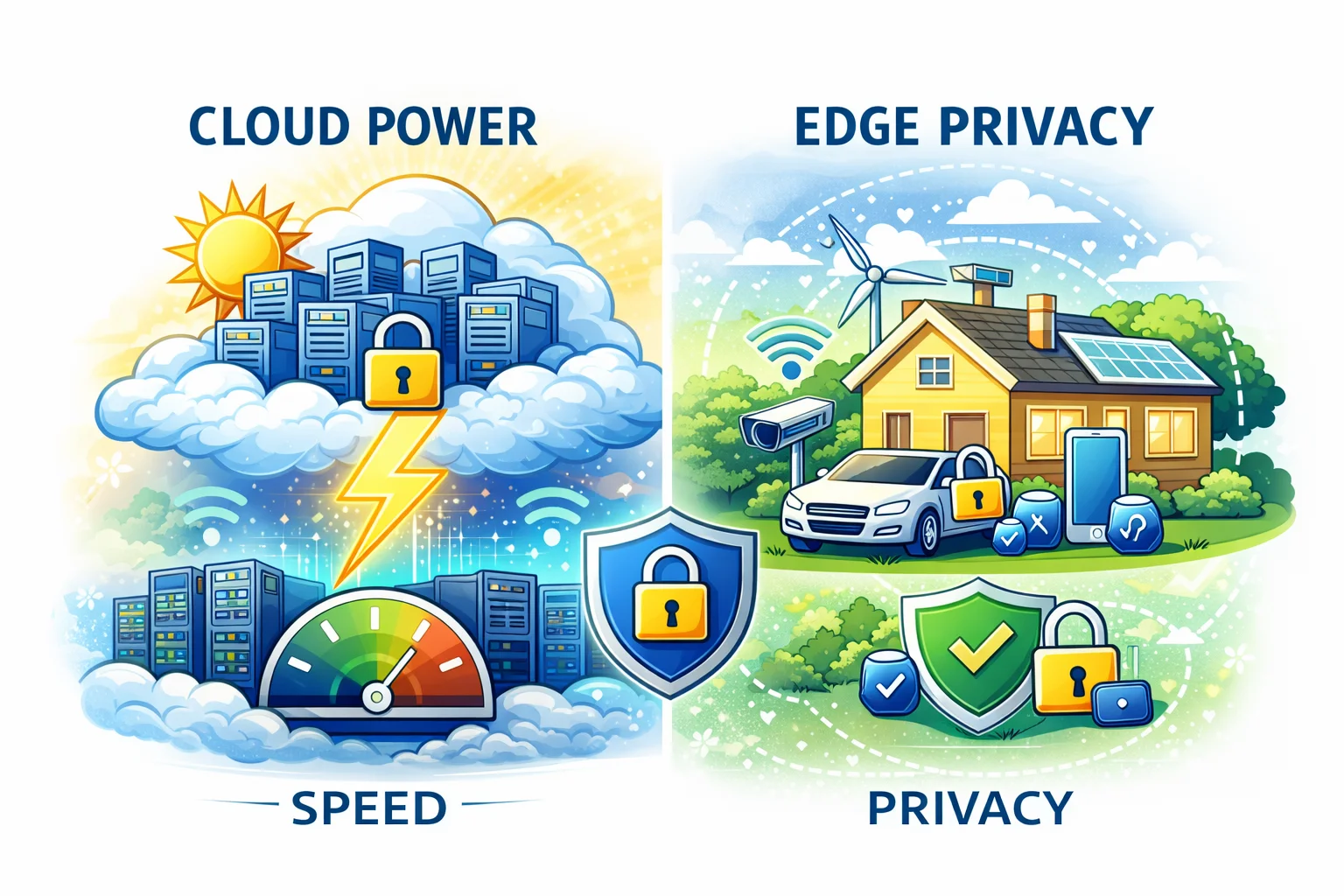
Hybrid computing—the strategic blend of on-premise, cloud, and edge environments—has become the foundation for performance-driven IT architecture. Organizations across industries are realizing that neither cloud nor local computing alone can handle the dual demands of speed and security. By combining these layers, companies unlock both computational agility and operational control.
Why Hybrid Computing Matters
Modern IT environments generate enormous data volumes. Whether from IoT sensors on factory floors or mobile devices in logistics operations, the challenge isn’t simply storing data—it’s processing it fast enough to extract real-time insights while protecting sensitive information.
A hybrid approach offers the flexibility to process mission-critical data on-site or at the edge, keeping latency and privacy risks to a minimum, while leveraging the cloud’s massive scalability for analytics, machine learning, and long-term data warehousing.
How Edge Computing Delivers Speed
Edge computing involves processing data closer to where it’s generated. Instead of sending every data point to a distant cloud server, edge devices filter, analyze, and act locally. This reduces data travel time, enabling real-time decision-making in milliseconds.
Industries such as manufacturing, transportation, and energy rely on this capability to keep equipment, safety systems, and autonomous operations functioning without network interruptions. It also reduces bandwidth costs by sending only relevant data to central servers for further processing.
The Cloud as the Engine of Scale
While edge computing handles immediacy, the cloud provides a scalable, flexible backbone for data-heavy workloads. Cloud platforms excel in training AI models, running analytics, and integrating applications across global teams. Companies can expand computing power on demand, without investing in large capital infrastructure.
This duality—edge for responsiveness and cloud for computational strength—empowers organizations to deploy intelligent systems that continuously learn and adapt.
Rethinking Privacy and Control
Data privacy remains a central concern when implementing distributed systems. Hybrid models let businesses decide which data stays local and which moves to the cloud. Private or regulatory-sensitive information can be stored and processed on-premise or at the edge, under company control. At the same time, generalized or anonymized data benefits from cloud analysis, driving innovation without compromising compliance.
Building Your Balanced Architecture
Designing an effective hybrid architecture requires a clear strategy for connectivity, workload placement, and system orchestration. Key considerations include:
- Latency requirements: Identify which processes demand sub-second performance and place them at the edge.
- Data sensitivity: Keep regulated information localized or within secured on-premise environments.
- Scalability goals: Use cloud resources for tasks with variable or high computational demand.
- Monitoring and management: Employ unified visibility tools to maintain control across all environments.
Partnering for Hybrid Success
Balancing cloud, on-premise, and edge systems requires expertise in network engineering, cybersecurity, and infrastructure management. Managed IT services and networking solutions providers can help design architectures that align technology layers with business goals—ensuring performance, reliability, and data governance remain intact.
Hybrid computing is more than an architectural trend; it’s a strategic shift toward computing that evolves with your business. By uniting the cloud’s power with edge-level control, organizations position themselves to innovate securely and operate with unprecedented speed.